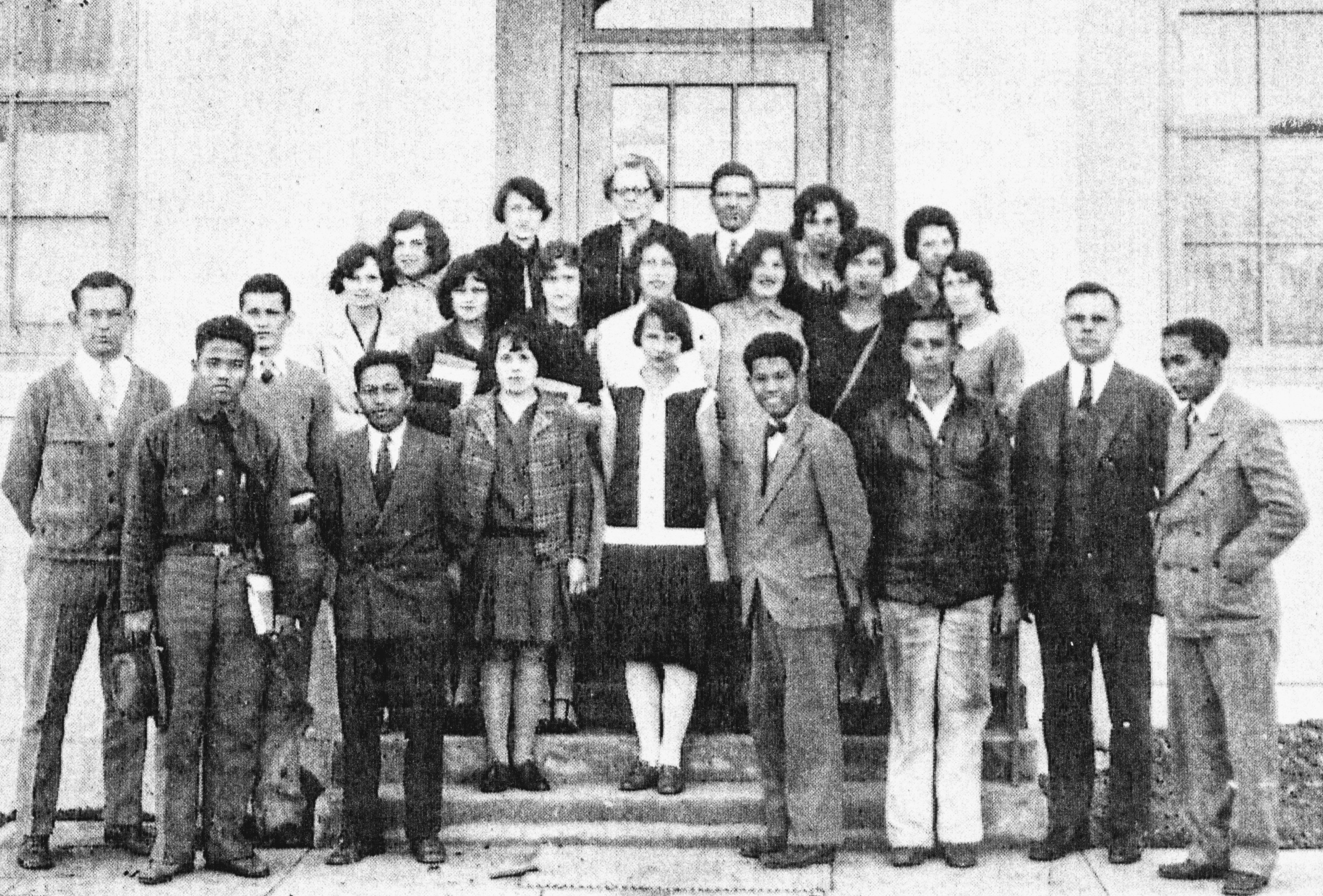
Salinas was right on trend in 1920, when the trustees of the Salinas Union High School District decided to expand offerings to include two years of college.
Salinas Junior College became the 13th such institution in the state. Fresno high school trustees opened California’s first junior college in 1910. Today the state has 115 community colleges in 73 districts,
The Salinas college opened on the same campus as the “new” high school on South Main Street. It sputtered a bit in its early years with insufficient enrollment, but reopened in the 1926-27 school year with two boys’ gym rooms converted to classrooms that could hold as many as 35 students, according to author Sean Roney in a history of Hartnell College*.
By 1929, “a new junior college wing was being added to Salinas High School, and Salinas Junior College had produced its first five graduates,” Roney writes. “Three of these graduates were successful enough to transfer to four-year colleges.”
The notion of public, affordably priced access to college arose in the early part of the 20th century from a confluence of populist and elitist factors, says Kathryn Renee Hornsby in a 2008 graduate dissertation for Georgia State University**.
In California, the presidents of the University of California, Berkeley, and Stanford University both wished to offload lower-division coursework onto other institutions, so that by the time students arrived at their doors, the young adults would be prepared to undertake advanced studies in two-year undergraduate programs.
Meanwhile, ordinary people everywhere were seeking greater opportunities for education that would lead them to better jobs. The country as a whole was undergoing a shift from agricultural to industrial work, with more jobs requiring advanced education.
“Populist leaders stressed greater access to colleges and universities as the means for social equality,” Hornsby says. “At the same time, elitist university scholars and leaders wanted to maintain the exclusive nature of their institutions.”
From these competing urges California’s first junior colleges came into being, following in the footsteps of Joliet, Ill., which established the nation’s first junior college in 1901, a development also propelled in part by the leader of the elite University of Chicago.
But California educational leaders soon grabbed the baton in the race to create junior colleges ― in particular, Alexis F. Lange, dean of the School of Education at UC Berkeley; and David Starr Jordan, president of Stanford. While Jordan aimed to retain the elite aspects of university education, Lange apparently understood the populist hunger for the economic advancement education could bring.
“As chairman of the California State Board of Education, Lange helped to inspire the junior college movement,” Hornsby says. “…Through a legislative enactment in 1907, high school trustees were authorized to ‘prescribe post-graduate courses of study for the graduates of such high school, which course of study shall approximate the studies required in the first two years of University courses.’”
The University of California went so far as to start offering a Junior Certificate to students who completed the first year of junior college.
“By the end of World War I [in 1918], it was clear that the universities could not hold the thousands of Californian youth wanting to enter postsecondary education,” Hornsby says. “…With the increased interest in higher education, the number of junior colleges in California rose from 21 in 1921 to 36 in 1927.”
As Roney notes, the decision by Salinas trustees to open a junior college in 1920 “was important, because at the time there was no way for a person to get a college education in the Monterey County region.”
By 1935, Salinas Junior College had 13 departments and a school newspaper. The same year, voters approved a bond allowing the purchase of 15.3 acres along Homestead Avenue between West Alisal Street and Central Avenue ― what today remains the main Hartnell campus.
“In 1939 enrollment reached an amazing 883 students all due to the new location, and the help of buses that brought students from Aromas, Carmel, Gilroy, King City, Pacific Grove, Santa Cruz and Watsonville,” Roney writes.
Community colleges flourished at this time because, as Hornsby says, “For many students the junior college provided the only way to attend an institution of higher education when most families could not afford the cost of sending their children away to college.”
But the advent of World War II and the United States’ entrance into it in 1941 caused enrollment to plummet, as men headed off to battle and women took their places in the workforce. In 1944, Salinas Junior College enrolled only 21 students.
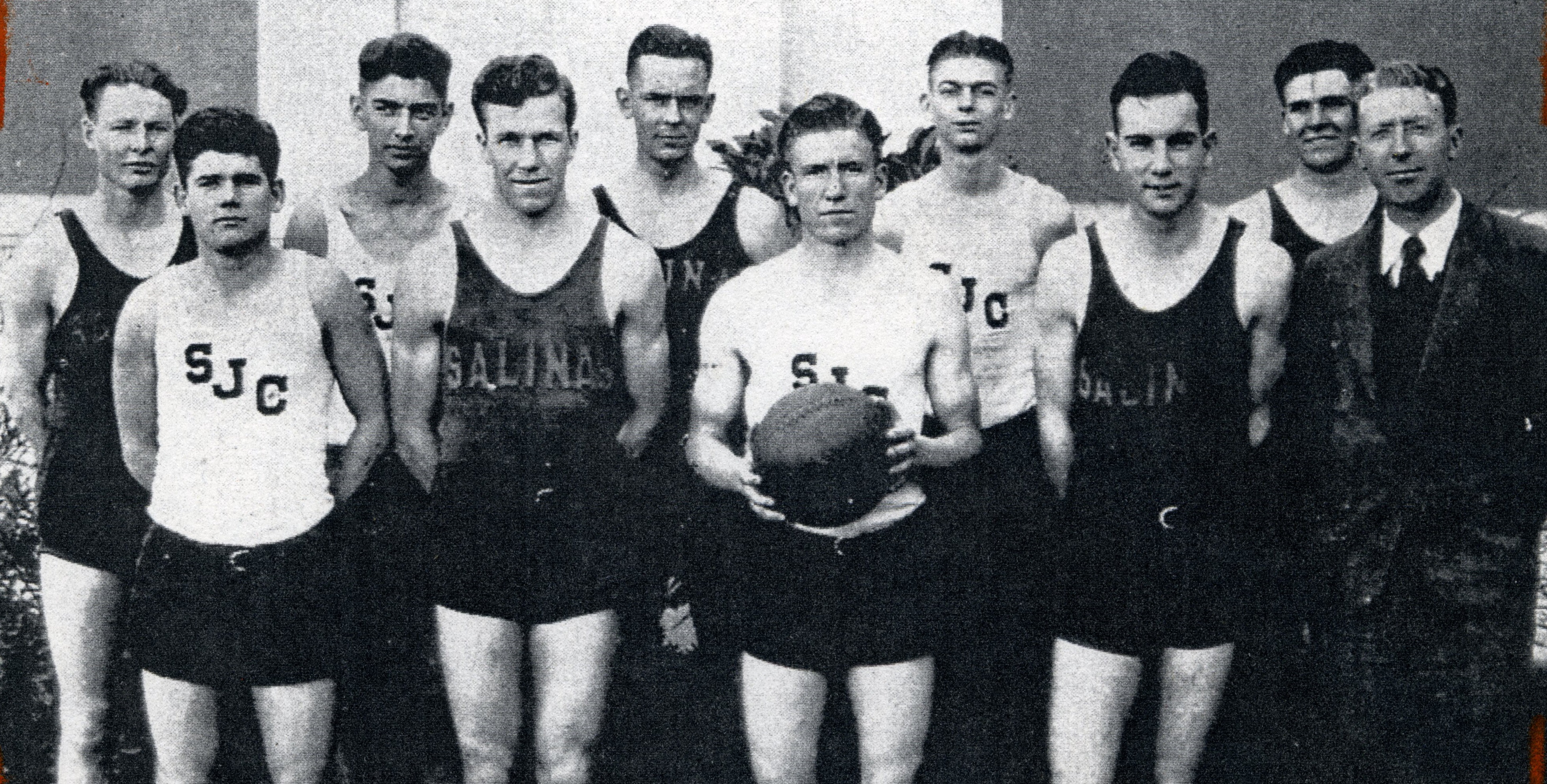
In 1946, shortly after the war’s end in August 1945, the college received 210 acres of land along Alisal Road that constitutes what is now the Alisal Campus, plus 10 buildings from the Guayule Rubber Research Station. The research station stemmed from a wartime effort that sought to augment rubber supplies using a plant called guayule, which temporarily displaced salad crops in some fields around Salinas.
The facilities were donated on the condition that they be used to educate veterans “and other people interested in getting a vocational background,” Roney writes.
With Congress’ passage of the GI Bill, which offered payments and cost subsidies to veterans attending college, enrollment in higher-learning institutions everywhere, including Salinas Junior College, was reinvigorated. By 1948, Salinas high school district trustees agreed to spin the college off into its own district, which became the Hartnell Community College District (renamed for William Edward Petty Hartnell at the same time as the college).
From there, Hartnell College has become an integral part of the Salinas community, educating tens of thousands of students and sending them onto four-year colleges or into the workforce.
* “William Hartnell: The Hero and His Colleges,” by Sean F. Roney, copyright 1999-2000 Sean F. Roney, available to read online at mchsmuseum.com, the web site of the Monterey County Historical Society.
** “Women in Two-Year Colleges: A Matter of Access,” by Kathryn Renee Hornsby, submitted May 16, 2008 as a graduate dissertation at Georgia State University.