Jan. 20, 2022
Hartnell College’s Agricultural Business & Technology Center (ABTI) on the Alisal Campus and its agricultural technology academic programs remain a focus of attention and a catalyst for innovation throughout the Salinas Valley and beyond.
A Hartnell Spanish-language TV commercial that aired in fall and winter 2021 showcased
the life-changing power of these programs, featuring 2020 Hartnell graduate Angelita
Cisneros-Aguilar encouraging her father, Miguel, to advance his career through ag
tech courses. Also, on Nov. 8, 2021, Hartnell administrators, faculty, staff and students
teamed up to welcome participants in the California Economic Summit for a tour and
presentations. The event featured the center’s newly installed $1.3 million mechatronics
lab, which supports non-credit and credit classes designed to upskill current workers
for applying robotics-oriented technology in food packaging and processing. And at
the height of the pandemic, on Dec. 1, 2020, the Monterey Bay Economic Partnership
presented a five-minute video tour of the ABTI during its online State of the Region
event. It included David Gill, owner of Rio Farms and chair of Hartnell’s Ag Steering
Committee, who said, “What we’re doing here at Hartnell is not only investing in our
students; we’re investing in the industry.” 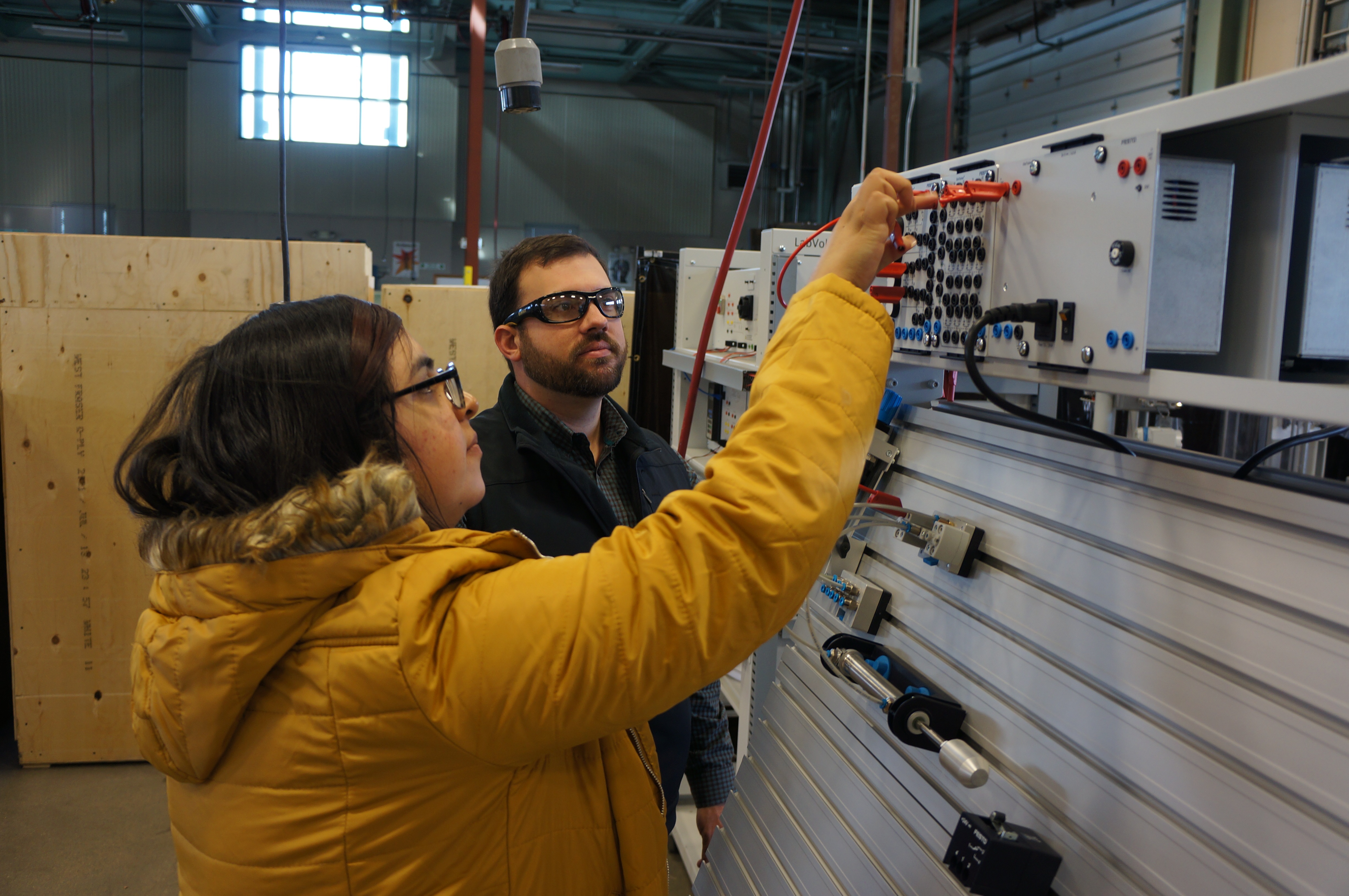
In the same spirit, and with an emphasis, Bank of America in fall of 2021 awarded a $260,000 grant to support Hartnell’s ability to help Salinas Valley agricultural workers gain new skills to succeed and advance in a workplace increasingly shaped by advanced technology. The money will support its $2.6 million, three-year Ag Tech Workforce Initiative, which aims to provide training for farm workers so they can move into jobs that require higher skill levels and provide higher pay. The training will focus on the areas known as STEM – science, technology, engineering and mathematics.
“Bank of America’s focus on racial equity and economic opportunity closely aligns with our own goal of helping both workers and agricultural employers adapt to changes in how fresh produce is grown, harvested, packaged and distributed,” said Clint Cowden, dean of Career Technical Education and Workforce Development. “Preparing employees to step into these expanding roles has a ripple effect not only in their own households but throughout our entire local economy.”