From Hartnell College to Harvard: How Hartnell’s STEM Program Helped Edwin Perez Pulido Pave a Path to Medicine
When Edwin Perez Pulido first set foot on the Hartnell College campus in 2021, he wasn’t thinking about prestigious universities or biomedical research. The newly arrived student from Michoacán, Mexico had to navigate a new country, a new language, and a new job as a closing specialist at Target.
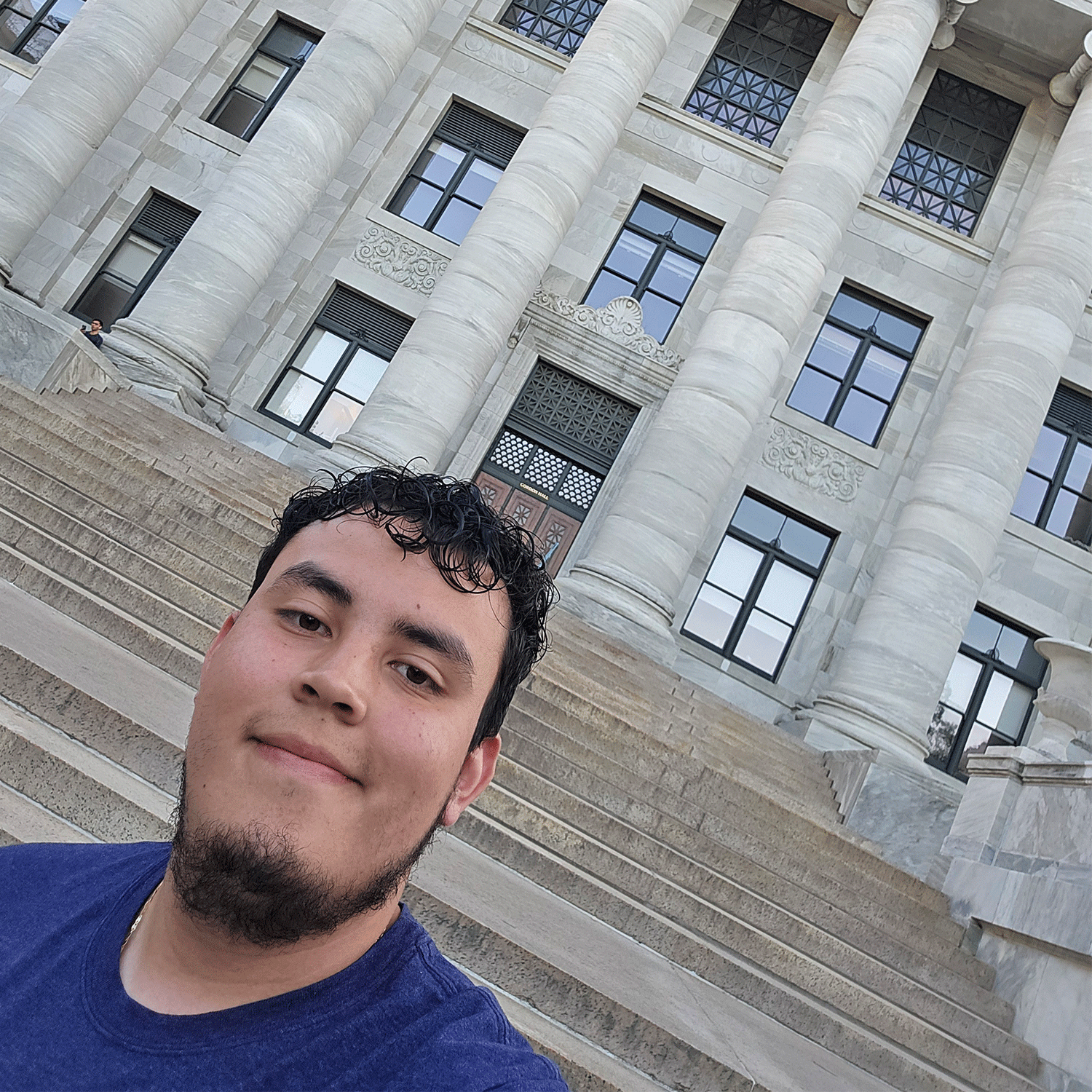
Faced with an uncertain future, what he found at Hartnell wasn’t just a college, it was a launchpad. Today, the 22-year-old biology major is conducting cutting-edge neuroscience research as a Sleep and Circadian Research Scholar at Harvard Medical School, while also working as a lab assistant at Scripps Research in San Diego. He transferred to UC San Diego in Fall 2024, and credits Hartnell’s STEM Internship Program — and the mentors who guided him — for helping him discover his passion and push past the limits he once imagined for himself.
“I didn’t even know I wanted to do research until I tried a micro-internship at Hartnell,” Edwin said. “That short project opened my eyes, and from there, everything started to grow.”
As a first-generation college student and the eldest son of Maricela Pulido and Jose Perez, Edwin knew the road ahead wouldn’t be easy. But at Hartnell, he found opportunity layered with support: micro-internships that offered a taste of research, summer programs that exposed him to real-world labs, and faculty mentors who believed in him before he fully believed in himself.
Hartnell designed its STEM program to not just prepare students academically — but to help activate their potential. By pairing structured coursework with real-world experiential learning and community-centered support, the program empowers students to thrive within the STEM disciplines (Science, Technology, Engineering, Math) — and beyond.
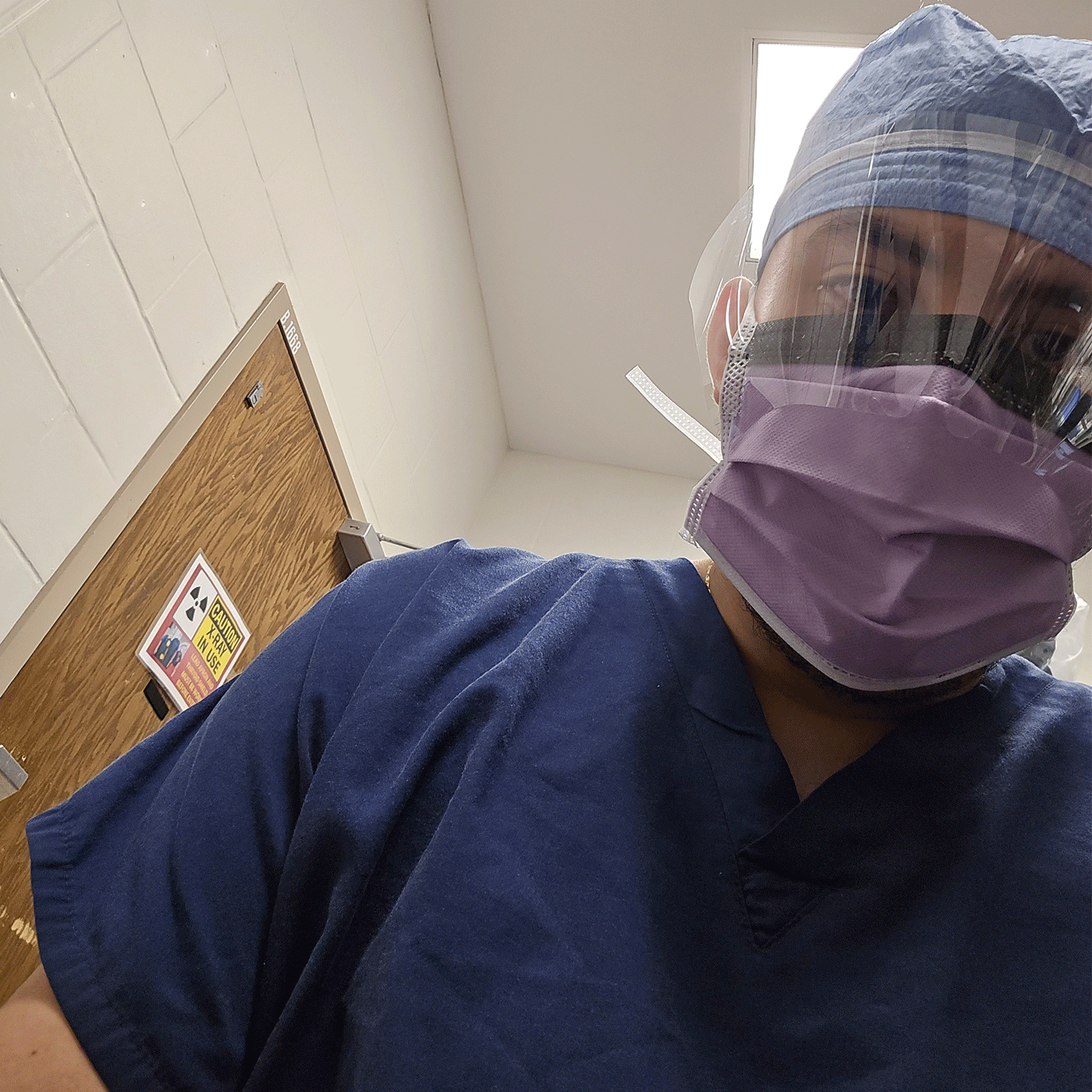
With the guidance of Hartnell STEM staff members Anely Meneses and Joel Thompson, Edwin applied to — and was accepted into — the MSTP Summer Scholars Program at the University of Rochester School of Medicine and Dentistry. It was a 10-week immersion into advanced biomedical research, including lab work in cognitive neurophysiology, a deep dive into photophobia in cystinosis, and the rare opportunity to shadow a neurosurgeon in the operating room.
“This program took place right before I transferred to San Diego, so it was like a trial for what was coming up for me,” he said. “The University of Rochester is a special place in my career because It showed me that I could excel in adverse circumstances. It was the first time I really felt tested as a scientist.”
Working with passionate and accomplished scientists at Rochester pushed Edwin to grow
and showed him the level he could reach with the right mindset. “Hartnell prepared
me for this by giving me opportunities and surrounding me with supportive mentors
and peers,” he said.
That summer in Rochester did more than teach Edwin scientific techniques; it tested
his resilience. Alone in a new city, adjusting to a rigorous lab environment, he learned
to think critically, communicate clearly, and embrace discomfort as a catalyst for
growth.
His time shadowing physicians, particularly a neurosurgeon focused on pituitary tumors,
sparked a new ambition: to become both a physician and a researcher — someone who
bridges the lab bench and the bedside.
“Seeing both the clinical and research sides helped me realize that I want to do both,”
he said. “I love the idea of finding answers in the lab that can help patients later.
I was able to see how powerful medicine can be in real time and at the same time how
research could help answer the questions that come up in the clinic. That connection
between science and medicine is what has pushed me to take part in both.”
Now deep into his journey to obtain an MD and work as a physician involved in biomedical
research (specifically in the field of neuroscience), Edwin has a powerful message
for current and future Hartnell STEM students.
“Don’t underestimate yourselves,” he said. “It’s easy to think that places like Harvard or national research programs are only for people with perfect backgrounds or tons of connections, but that’s not true.”
He urges students to take the first step — to ask questions, seek mentors, and apply for opportunities they may think are beyond their reach. “I started at Hartnell feeling unsure if I could even compete, but the support, mentorship and opportunities I found there helped me realize I belong in those spaces,” he said.
“Just take the first step, ask that question, apply for that program, talk to that mentor, and believe that you deserve a seat at the table. Hartnell gave me the tools, mentors, and confidence to go after opportunities I never thought were possible, so take advantage of that.”